← All projects

Project case study

UnBox / JUPITA

A tangible toolkit and special-interest community for early-career researchers working on Justice, Power and Transformative Action in Sustainability.

Cover of the JUPITA collaborative research manifesto.
Host
Utrecht University · Centre for Unusual Collaborations · Pathways to Sustainability
Role
Postdoctoral researcher · community-of-practice lead · co-developer
Period
2024 – 2025
Discipline
Research methods · co-production

Context

Early-career researchers across sustainability disciplines often face the same blind spots: how to make collaborative research processes legible to peers, supervisors and partners; how to interrogate hidden assumptions about justice and power; how to share what has been learned in formats that can be reused.

JUPITA emerged as a transdisciplinary community to address exactly these questions, and UnBox is its flagship tangible artefact.

Methods

  • Co-design sessions across multiple universities and contexts.
  • Iterative prototyping of physical, game-like components representing collaborative research stages.
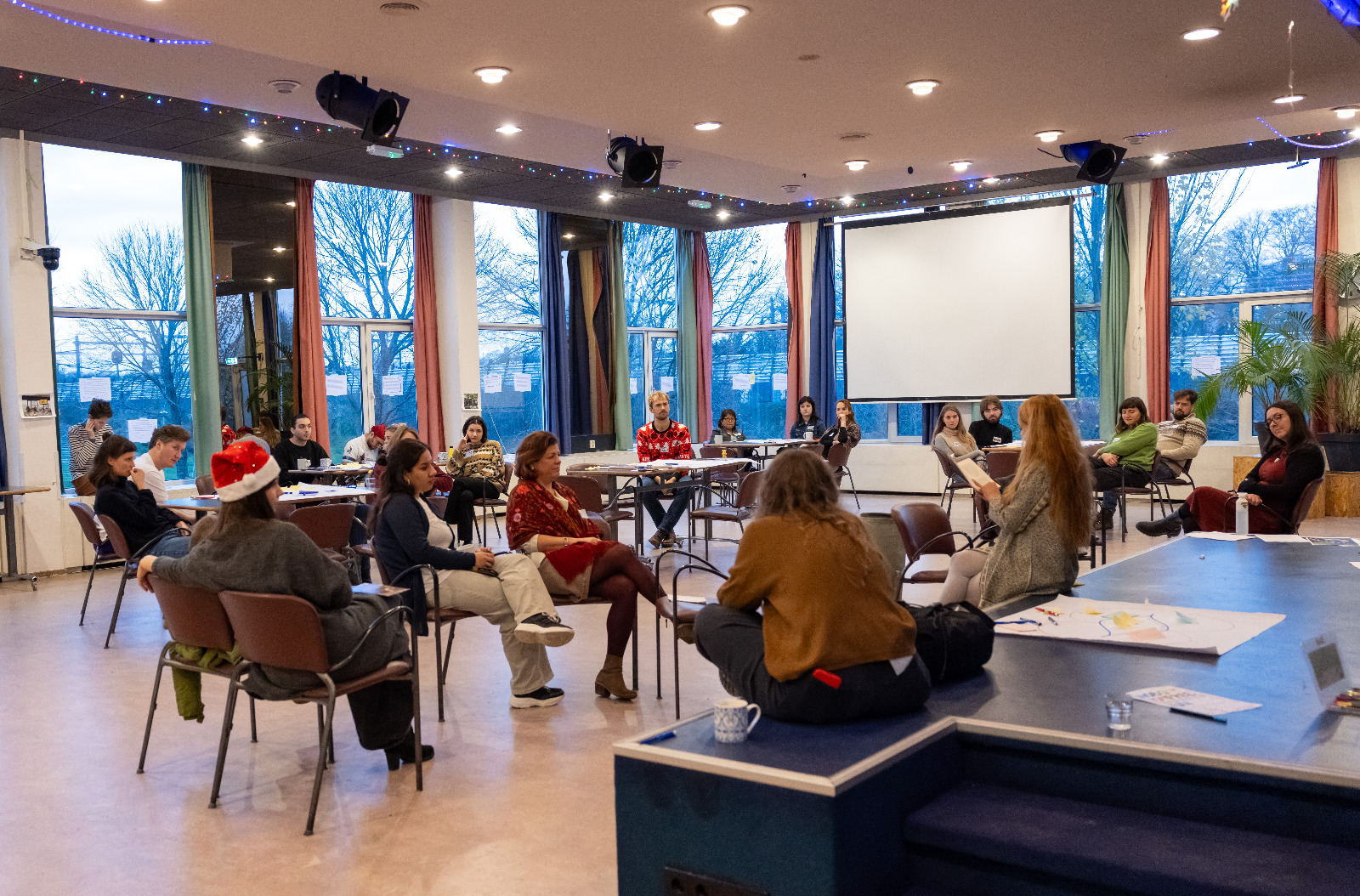
  • Workshop testing with doctoral cohorts and early-career networks.
  • Reflective writing pulled together as the JUPITA manifesto.

Outputs

  • UnBox toolkit — a physical kit that surfaces metaphors, roles and frictions inside a collaborative research project.
  • JUPITA Zine (2024) — a public-engagement publication.
  • Collaborative Research Manifesto, published in International Journal of Social Research Methodology (Barker, Pervez, Wahome, et al., 2023).

Evidence & impact

  • Peer-reviewed publication in a leading social-research methods journal.
  • Tested and presented with doctoral and transdisciplinary research communities.
  • An ongoing community of practice spanning UK, EU and Global South partners.

Relevance

This work demonstrates how research-impact infrastructure can itself be co-produced — and how playful, tangible artefacts can shift institutional conversations about justice and power in sustainability research.

Read the published manifesto