Methods you can pick up.
A growing set of open-access tools and urban games developed across research, civic and community settings — designed to be used by other facilitators, partners and researchers.
Regenerative design tools
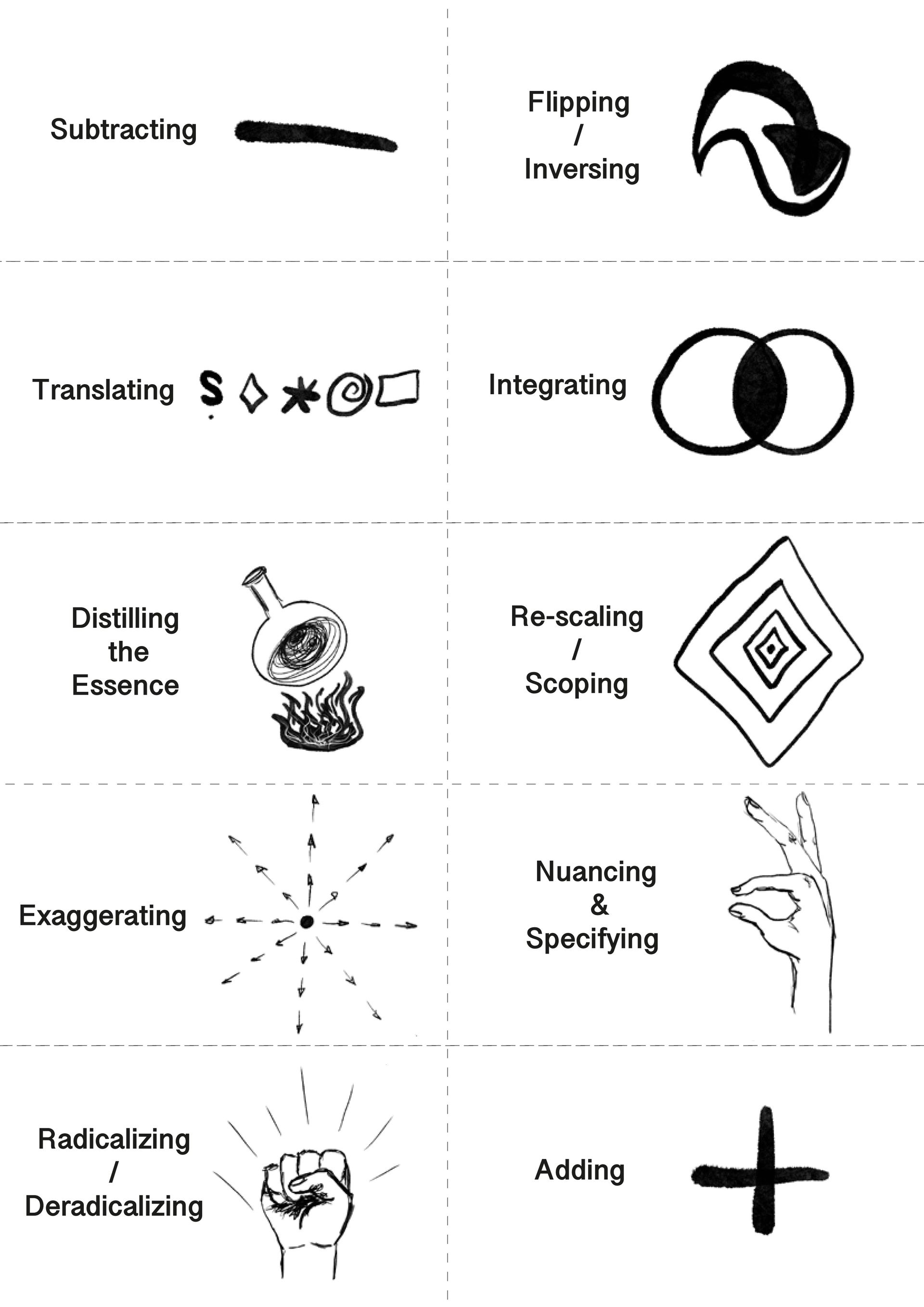
Movement Cards
A co-creative facilitation tool that helps groups generate ideas collectively — surfacing individual passions, interconnecting them into an ecosystem of related concepts, then narrowing to actions a group can actually take together.
Available: Movement Cards Actions · Movement Cards Questions · facilitation guide. Free to use with attribution.
Movement Cards deck 1 — download here →
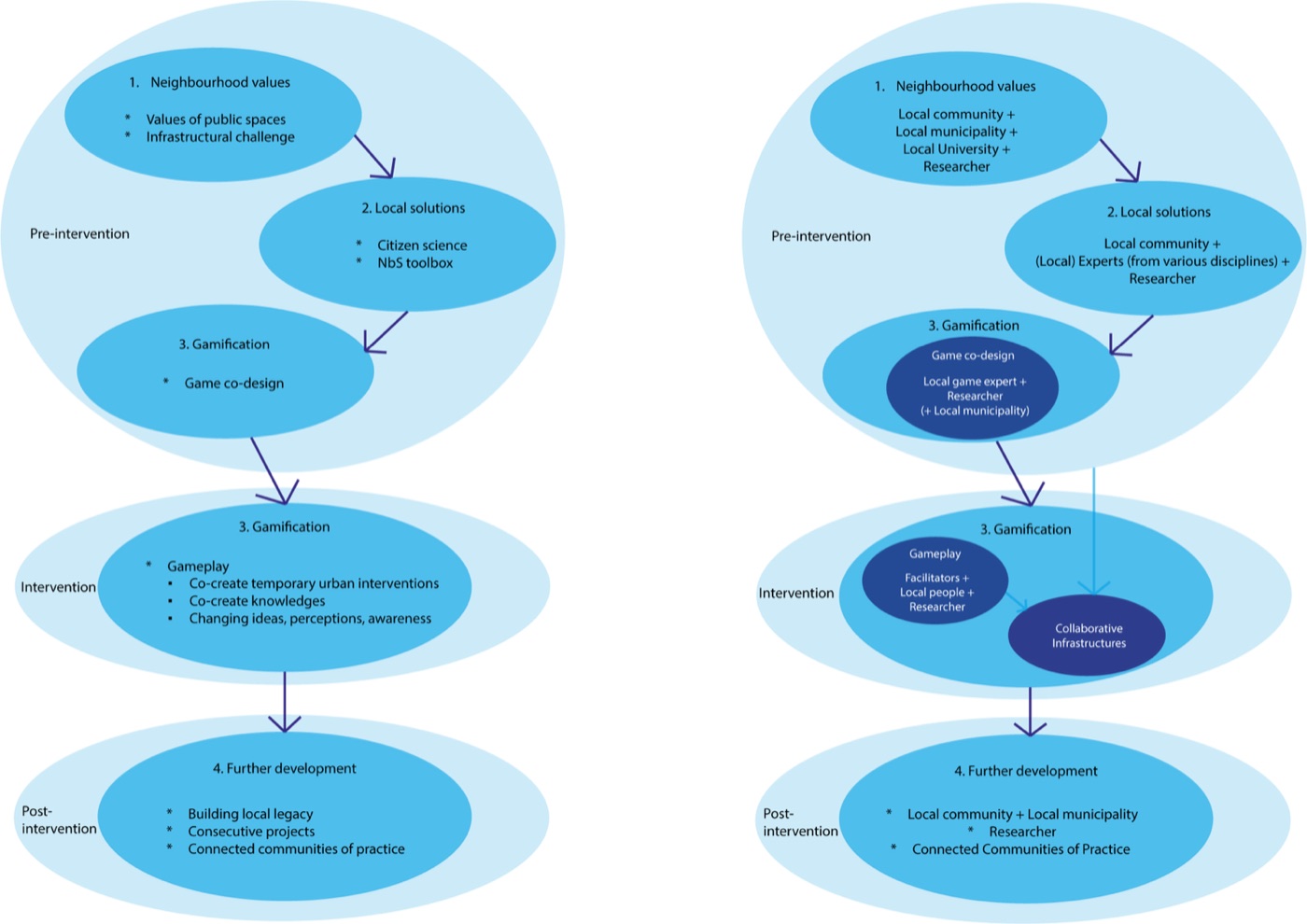
Nisba — framework for collaborative infrastructures
A structured framework for participatory infrastructure design developed across two field sites (Budapest and Beirut) during doctoral research. Documented in full in the PhD thesis with applications and results.
Urban games
Ősz Majális
A festival-style urban game drawing on the Hungarian May Day tradition. Collaborative building stations, mini-games, a passport-and-stamp system and raffle prizes — participants built compost hives and pallet benches, stencilled watering cans and shopping bags, calculated water footprints, and planned rainwater collection.
Outcome: the municipality granted permission for the local community to use the space as a community garden in exchange for stewardship — turning a one-day intervention into a longer experiment.
The Garden of the Malawans
A live action role play (LARP)-style performative game based on Augusto Boal's Theatre of the Oppressed. Players inhabit the imaginary Malawan society and world that includes an art-food garden, a token bank, a souk (market) and an upcycling factory. Mid-game rule changes trigger systemic blockage, resulting in a collective discussion, self-organised grouping around self-identified main challenges to be tackled hackathon-style. Consecutive game rounds include piloting the co-developed solutions for trial & error and further tweaking.
Sun Tales — Trust in Play! Elefsina Cycles
1–4 players interact with a cityscape using sun-powered colour-filtered mirrors to enact chapters of the Persephone myth across three mini-games (~30 minutes). Open-source: instruction sheets and documentation publicly available.
Our Place in the Game
An on-site, performance-based project co-created by Nikolett Puskás and artist Hector Dyer with resident participants. Rather than delivering top-down climate information, we built connections through place-based shared stories intertwining the climate crises with local multi-species challenges to learn from. The work resulted in an on-site performance, co-authored zine and museum exhibition.
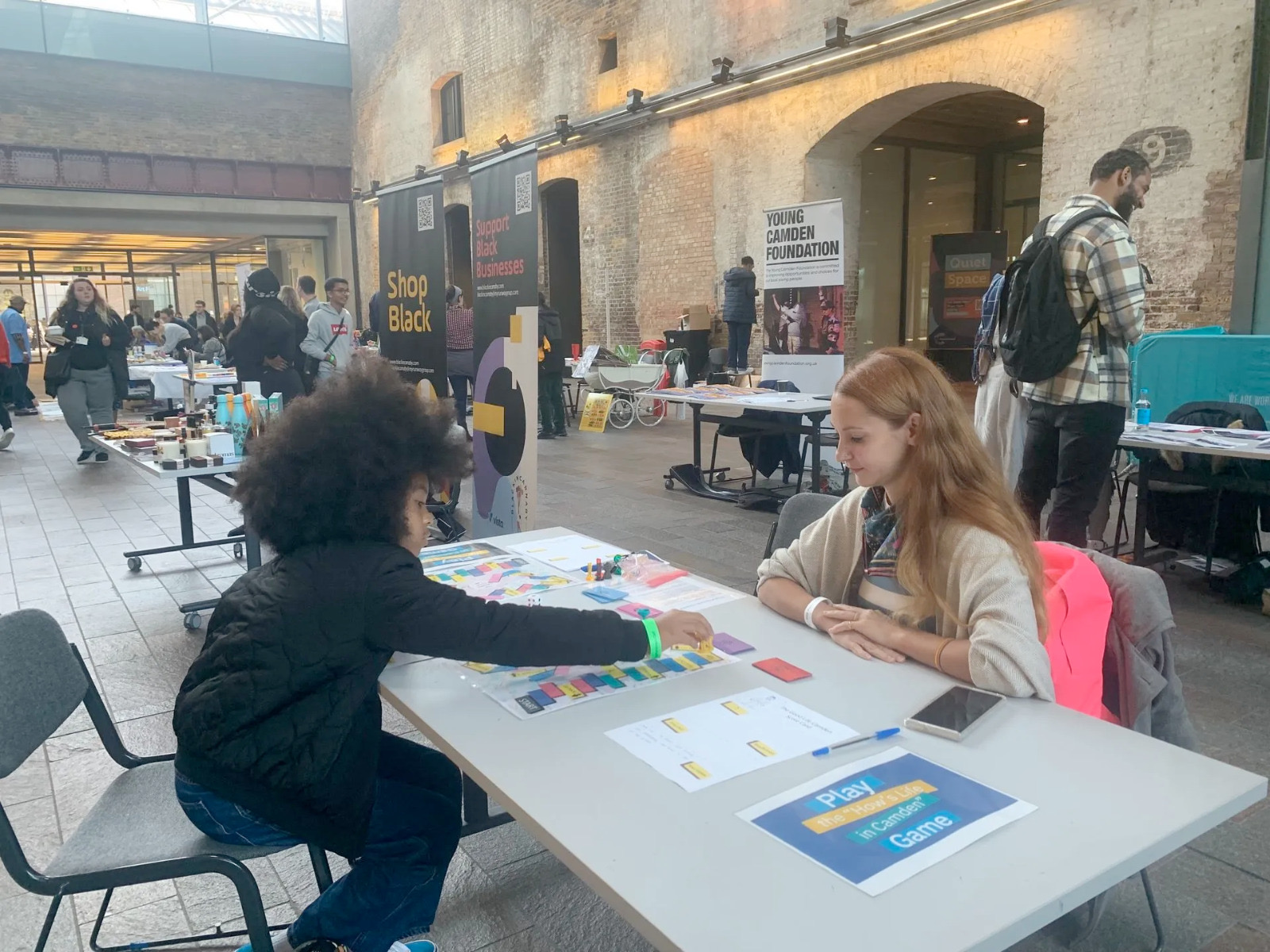
The Good Life Camden Game
A board game commissioned by Camden Council to measure and co-create indicators of "the good life" with residents — tailored for distinct participant groups across the borough.